
To a woman who fought using words and ensured that her life story is one to be shared with many of her readers. One of her books even made it to be included as part of the South African English school curriculum. Little did we know how she was shining light to her own racial segregation experiences that she’s endured.
Today, I pay special homage to a phenomenal writer, teacher and journalist – Bessie Amelia Head. Born on the 6th July 1937 in Pietermaritzburg, KZN to parents of a mixed race, whose relationship was heavily forbidden at the time. Her mom was deemed mentally unstable and referred to a Schizopheria hospital which left her being moved from one foster home to another while growing up. She never really knew her parents.
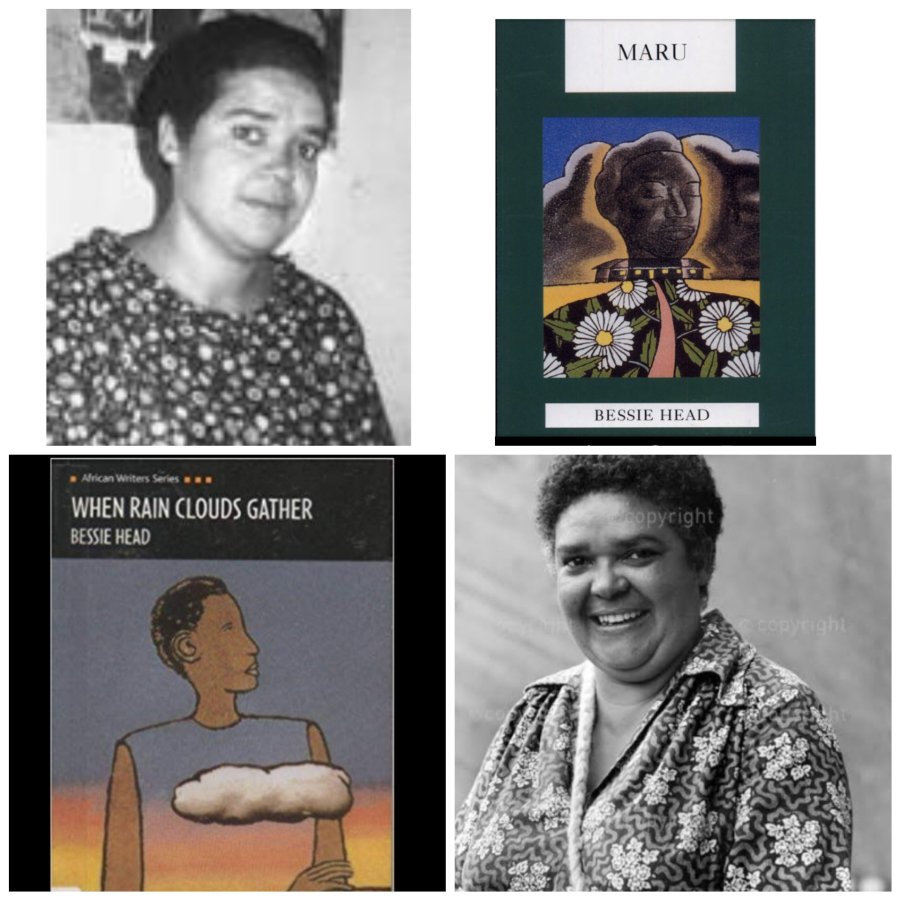
She experienced extreme prejudice due to her race which continued to afflict her throughout her life.The issue of mixed-race prejudice became a prominent theme in her second novel ‘Maru’ published in 1971.
She completed her Junior Certificate in 1963 and went on to pursue a 2 year Teacher Training course. She did this while staying at a Catholic school, headed by Margaret Cadmore, who Head depicted by name and with admiration in ‘Maru’.
She began teaching in 1956 and resigned a year later determined to start a career in Journalism. She moved to Cape Town where her journalism work kick-started and flourished, contributing immensely to early gender perspectives, critique and so called ‘Left-wing’ political activism through her writing columns within the late 1950s in the black journalism fraternity. Her work soon became politicized after witnessing countless political resistance which saw her join the PAC in 1960.
Head got married and had a son in 1963 but things started to turn south health-wise as she started showing signs of depression. She left Cape Town to start a new life in Pretoria. Things did not work out quiet well for her there.
In 1964 she got a teaching job in Botswana to earn a living. Her passport was however denied and was permanently barred from re-entering South Africa. It was in 1965, that she started writing seriously, often by candlelight. Her stay in Botswana was not a pleasantly smooth one as she moved from one village to the next as a result of victimization and prejudice.
She stayed months at a Botswana farm in Radisele where the Agriculture exposure provided material for her very first novel ‘When Rain Clouds Gather’,which was published in 1969 to instant success, via funding from New York correspondents who once read her ‘A woman from America’ piece.
Her only son experienced bullying from children at his Francistown school for being considered a ‘coloured’,which caused her to move back to Serowe for a school where he was already socially known and accepted.
Her return to the Serowe was met with discomfort, distress and public humiliation and lead to her first breakdown and brief hospitalization. The community allowed her to rent a tiny, isolated hut where she lived with her son, while writing her second novel ‘Maru’ – where she addresses abuse of tribal power and alienation in the Serowe community.
‘Maru’ was followed by ‘A Question of Power’ novel which addressed issues of racial and tribal prejudice, which was published in 1973. She struggled to get her work published because of constant rejection by her publishers and agent, contributing to another breakdown.
‘The Collection of Treasures’ became the first short story collection to be published by a black South African woman. In 1979 she was granted Botswana citizenship.
Her last publication was a historical novel called ‘A Bewitched Crossroad: An African Saga’ appeared in 1984. Head lived with her son in Serowe until her death from hepatitis in 1968. She is buried at Botalaote in Botswana.
In 2003 she was awarded the South African Order of Ikhamanga in Gold for her contribution to literature and the struggle for social change,freedom and peace. The Bessie Head Heritage Trust and Bessie Head Literature Awards were established in 2007 in her honour. The Pietemaritzburg library was renamed on 12 July 2007 after her.
What a woman! What a life!
#BessieHead – a silent hero, who’s writing work continues to be used as benchmark for social change.
Credit to sahistory.org.za & thuto.org
 SithenjwaT