
“Local government elections are not that important“
“They are overrated“
“We all know who will win...”
“What’s the point of even voting?“
“Who cares about voting these days?”
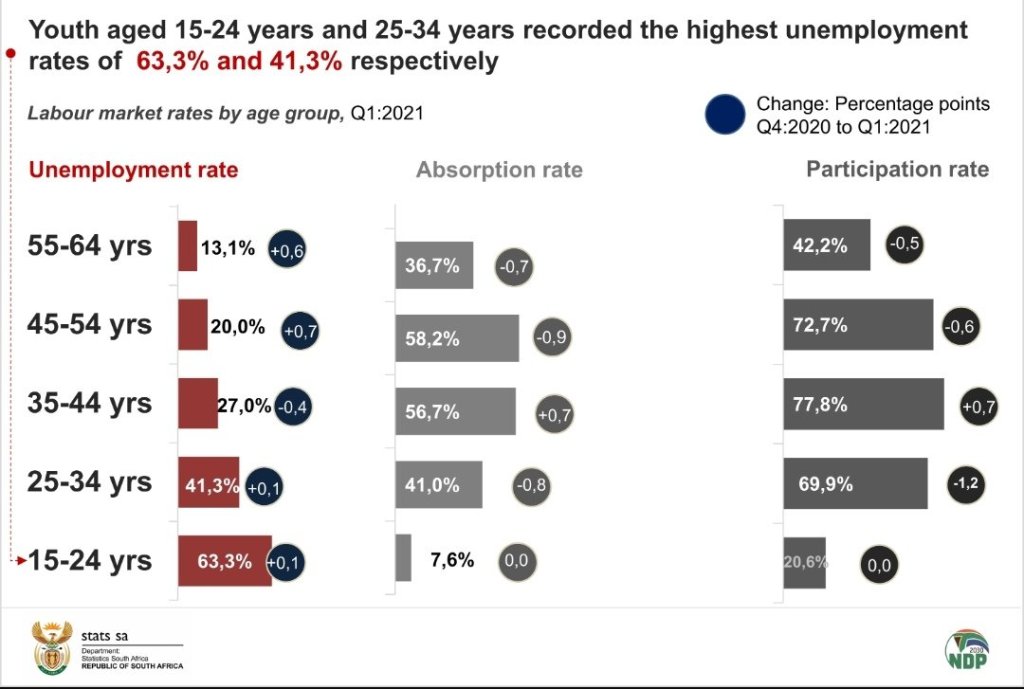
These are some of the many sentiments often shared by people when asked of their take on the upcoming local government elections. Many parts of the world have gone through elections this year amid the Covid-19 pandemic, and soon it will be our turn. There are a number of valid issues that are of concern, often involving politics in our country – from the staggering unemployment rates recently published by Stats SA (picture below) and the numbers of unemployed graduates, in particular, which are also progressively on the rise, high crime rates, amongst many, you name it – I am sure many South Africans have an opinion on any of these, if not more.
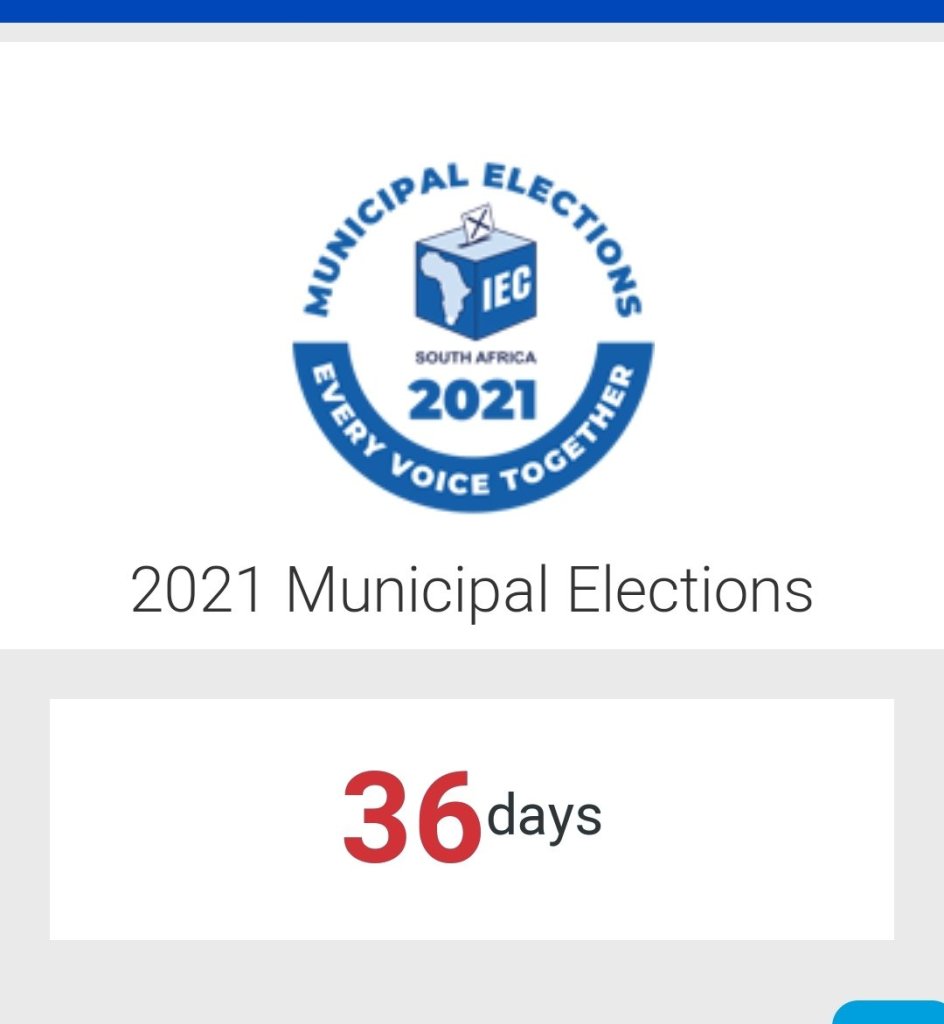
Cooperarive Governance and Traditional Affairs Minister Dr Nkosazana Dlamini-Zuma has declared the 1st of November 2021 as national voting day in South Africa for local government. This will be the country’s sixth municipal democratic election since 1994. The big show down is scheduled to take place in exactly 36 days and a couple of hours from now.
I know there is also sentiment that ‘national government is far more important in setting the mandate and agenda for local governance’ but I caution against this, personally because for the national center to hold, a stronger and more effective local government is the essential ingredient. Local elections are where these envisioned changes start – basic services such as access to clean water, refuse removal, street lights, blocked street drainage and pipes, rates & taxes, electricity, and road maintenance for instance are fundamental local government objectives and core functions.
Young people make up a significant proportion of our population and as such, can potentially be game changers, if they choose to. According to Stats SA, young people of 35 years and younger amount to 20 million of the estimated 60 million total of the population in the country. This is slightly over 30% of the population. I remember, at home during voting day, how my mom and the many elders in the family will make it a point that it becomes the first thing that they do on that day. This was something encouraged, if not enforced to most of us at home to do. This speaks to the many, if not millions of the older generation folk who most probably do the same in most parts of our nation – and this is a fundamentally significant act. The older generation seem to not compromise on this privilege to vote that they’ve been given today, that they know was not awarded to them in the past.
We are constantly bombarded with calls to change the status quo, but how will this be the case when the right to vote is left only to others – when on voting day, many young people will go about their normal lives and treat it as yet another ‘holiday’. Reported figures reveal that only 17.52% of young people between 18 and 29 years of age are on the voter’s roll (see voter’s roll image to follow). This means the majority (82.47%) will be determined by people aged from 30 upwards.
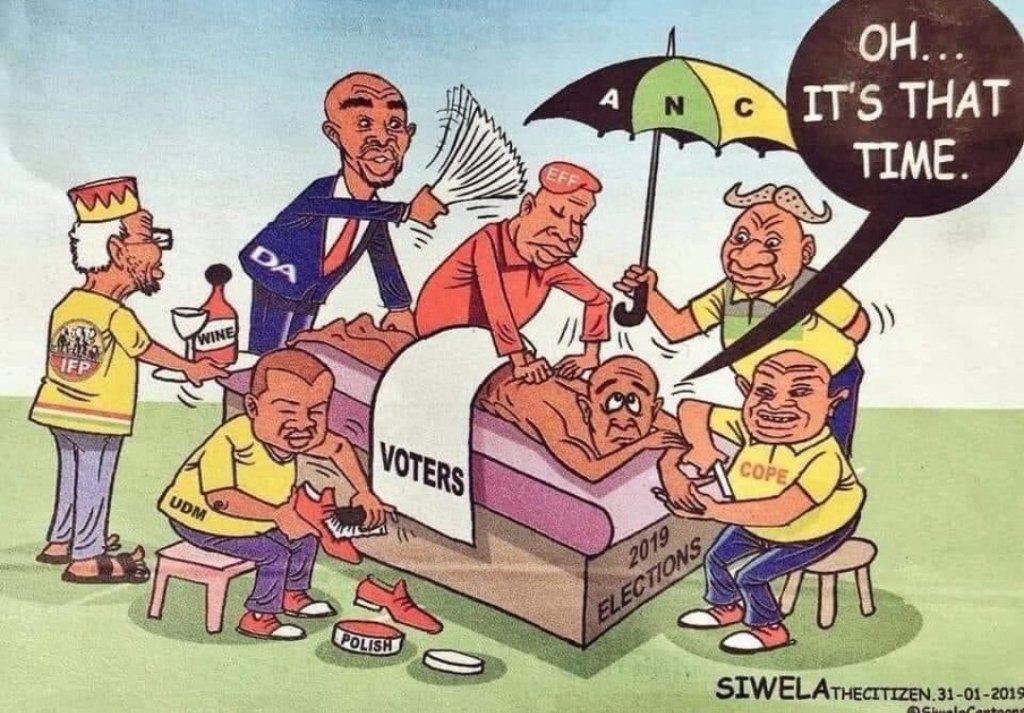
Granted, voting won’t bring much immediate change in our lives but it’s the one vehicle we have towards having an input in the prospects of changing the status quo so to speak. Yes, politicians are criss-crossing the country, making big promises and statements to allure us all to trust them. They are in our neighborhoods, our homes, our doorsteps, bringing some of us food parcels and others, free T-shirts. Colour posters are on pretty much every street pole you can think of, I always imagine the printing costs associated with these posters each time I see them, before I read what they have to say; catch phrases and all. Politicians are making big statements and commitments that our current lives resonate with. It’s their time and we know this but it’s also our time. They do all of this, knowing that for the remaining days, leading up to the 1st November, we, the voters have the power – the upper-hand and we ought to use this advantage well.
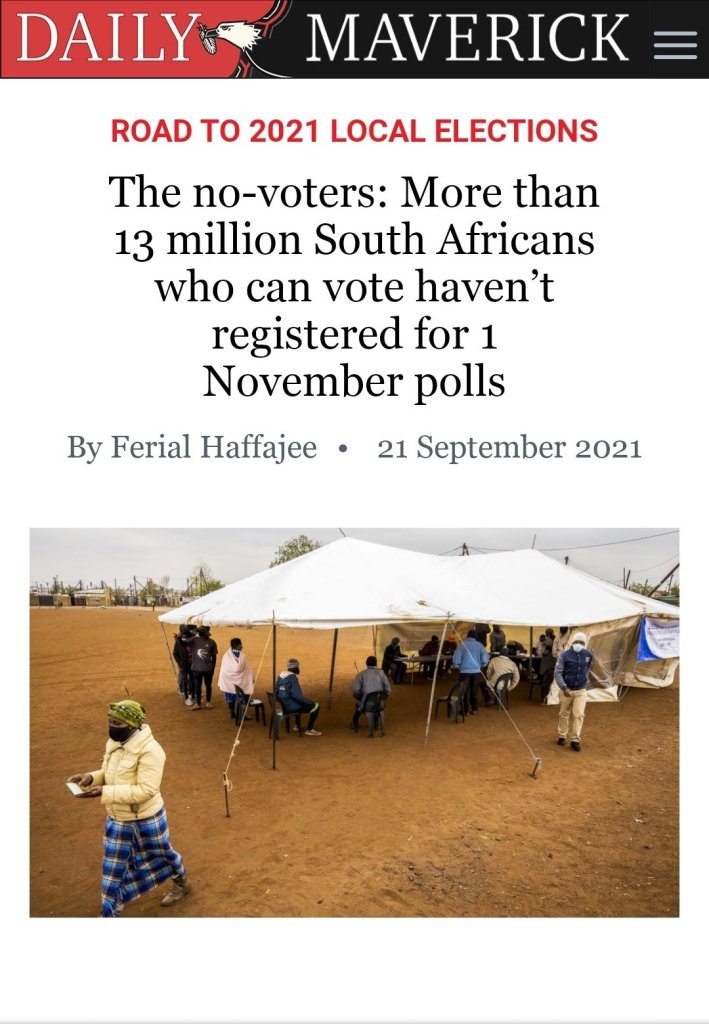
When one looks at the low numbers of young people on the voter’s roll (see image below from Daily Maverick) and the numbers of those who will actually vote on the day, it will be a disappointing handful. It’s times like these, when the need for change is echoing across most parts of the country, when it would makes sense to just stand up and be counted, no matter the outcome. Choosing to stay away, in boycott, will not help to bring about the change we all so desperately seek but instead, it leaves those who will wake up to put their ‘X’ on the ballot box, with the advantage to dictate whether the status quo changes or not. The elected party or parties (it’s difficult to get an outright majority these days) will lead local governments for the next five years. Think about that.
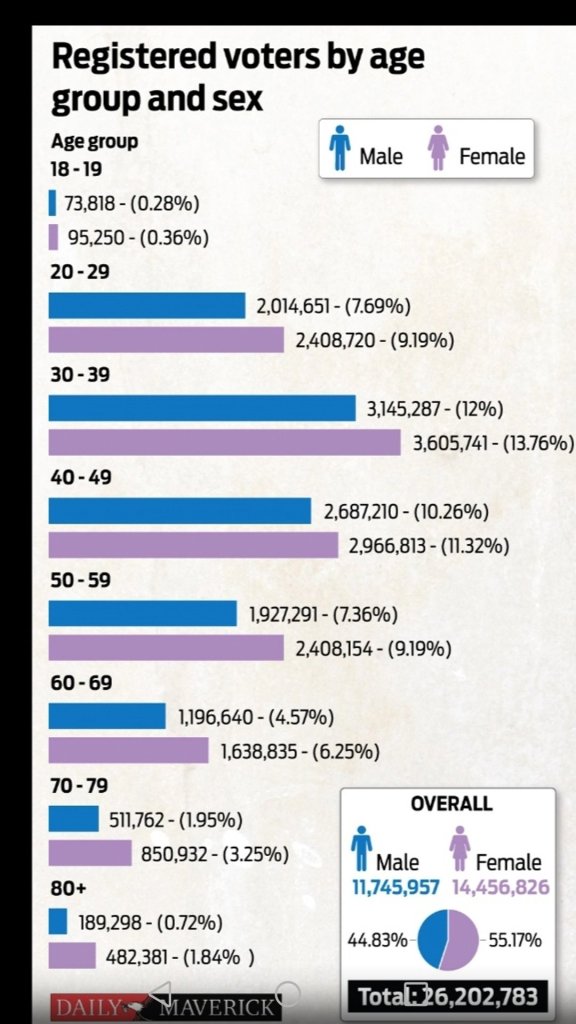
When we go out to vote, it may not help much instantly, but it is us doing something for our young democracy and our country as opposed to resorting to sit back and being spectators. We need to refuse the spectator option.
As South Africans we should not leave the right to have a say in who will govern us locally, completely in the hands of others as they will gladly do so on everyone else’s (those who choose to boycott) behalf. This post is not a plea to go vote out the ruling party nor one to go vote in a specific party at all, but a plea for the majority of us to go out there and have a say in who governs our vibrant and beautiful local municipalities and to respect the freedom of choice and association of everyone as enshrined by our constitution in the process. Let’s head out, in our masks, in numbers to have our say.
Reference articles
https://www.elections.org.za/pw/Elections-and-results/Municipal-Elections-2021
http://www.statssa.gov.za/?p=14415
The no-voters: More than 13 million South Africans who can vote haven’t registered for 1 November polls
 SithenjwaT