
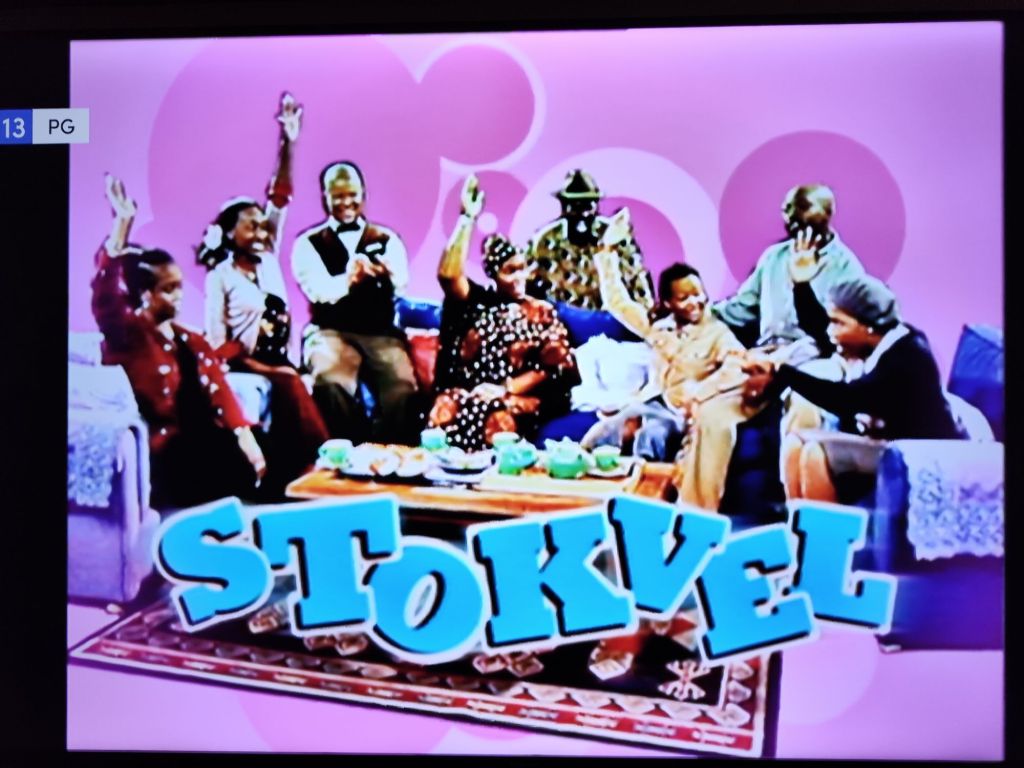
A Stokvel is an age-old African tradition that is popular often in township communities of South Africa, that brings people together for a common cause. I have witnessed the evolution of this tradition while growing up in Soweto and it’s incredible the lengths, breaths and depth of their impact. With that, allow me to introduce you to a Proudly South African TV sitcom named ‘Stokvel’ – which was aired by the SABC in 2001 to 2009 (a total of eight seasons) and tells a story of how these organizations build friendships, families and communities for the long haul.
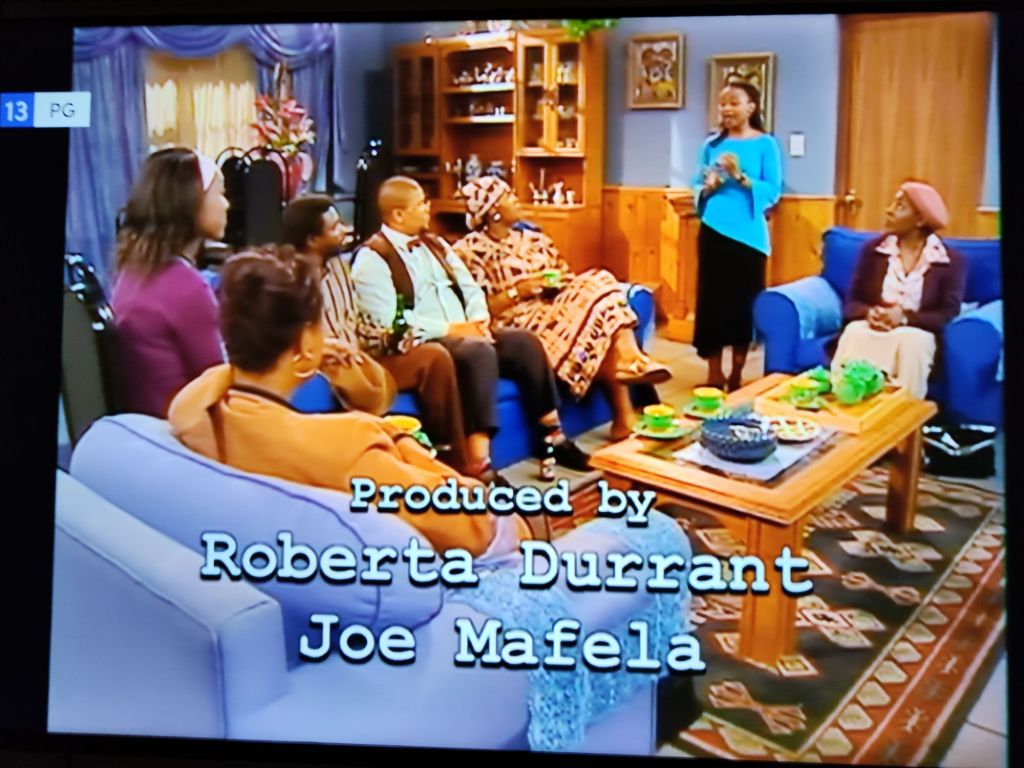
I recently stumbled upon a special re-run of the popular sitcom on SABC 2, weeknights from 6PM CAT whilst channel hoping on my cable network channel list and that alone, was enough to take me back and to inspire this piece. I must be honest, I used to enjoy watching this show while growing up and I remember those nights and years fondly. The memories are so vivid that I recall that I used to manually record this show even on VHS cassettes. I wonder if I still have those cassettes, but I doubt there’s even a VHS recording machine to be bought in this day and age. I also remember singing along the catchy tune that plays each time it starts and during the ending credits, which was composed by Mac Mathunjwa.

The sitcom is a Penguin Film Production created by Roberta Durrant and Joe Mafela amongst many other team members behind the scenes including Visit Dibakwane as director. The show’s concept is by the late Joe Mafela (Mafela also co-produces and is the assistant director), while the writing team is led by Thomas Hall. The sitcom was shot fully in studio, actually in Cape Town: at Sasani Studios although the setting in the show is based in Diepkloof, Soweto. Stokvels in the township are informal gatherings or clubs that people choose to participate in for largely, financial benefits as a means to boost one’s financial muscle, accomplish personal projects and life goals, and curb the high debt challenges affecting mostly African township community people. Some people call these ‘societies’ or ‘clubs’ depending on where you are in the country. I come from a family with sisters and aunts who belong to society clubs or a Stokvel and I have seen them grow in leaps and bounds over the years.
The show has won numerous awards in the South African TV space and notably became among the first local programmes to be nominated for an international Emmy Award. The story follows a young couple, newlyweds who are Mojo and Lerata Khumalo, played by James Ngcobo (for much of the seasons) and Manaka Ranaka, who are each part of a Stokvel club. Mojo is the chairman of the all-gentlemen Stokvel called Majakathata (he who eats under dire conditions) and they often meet at a more chilled and relaxed environment at a shebeen/tarven at Sis Hazel’s (played by Thembi Mtshali-Jones). Members of Majakathata include Mojo’s friends who are: Budgets Naledi (played by Moagi Modise initially and then later, after 2005: Ntobeko Rwanqa) and Biza Mudau (played by multiple SAFTA award-winning for the same role and breakthrough star for me, more on why later, Tshamano Sebe).
Lerata, on the other hand is part of an all-ladies Stokvel called ‘Sweet harmony’, who are a more reserved and structured group of ladies with unique personalities. The chairperson of Sweet harmony is Pastor’s wife, Lerata’s aunt and the severely strict Masechaba (played initially by Limakatso Manotwane and then later, Limakatso Mnisi after 2005). Then there is tourist township queen Ayanda Twala (Andrea Dondolo), Shebeen queen and musician Hazel Dube (played by Thembi Mtshali) and sweet, innocent but naive Pinkie Serobe (Lele Ledwaba). Shortly, I provide a rundown of the unique characters in the Sitcom and how each excel in the delivery of the characters on-screen, from my perspective.
The two Stokvels are completely different, not just by the mere genders alone, though with a powerful common purpose. One is seemingly dysfunctional while the other is run like a tight ship. Both manage to progressively navigate the space of close relationships and building a spirit and genuine sense of community among the group of friends. This is what I believe, makes Stokvels successful associations by nature. There’s more to Stokvels than the money saving aspect – it’s the relationships and memories made along the journey that make it worthwhile.
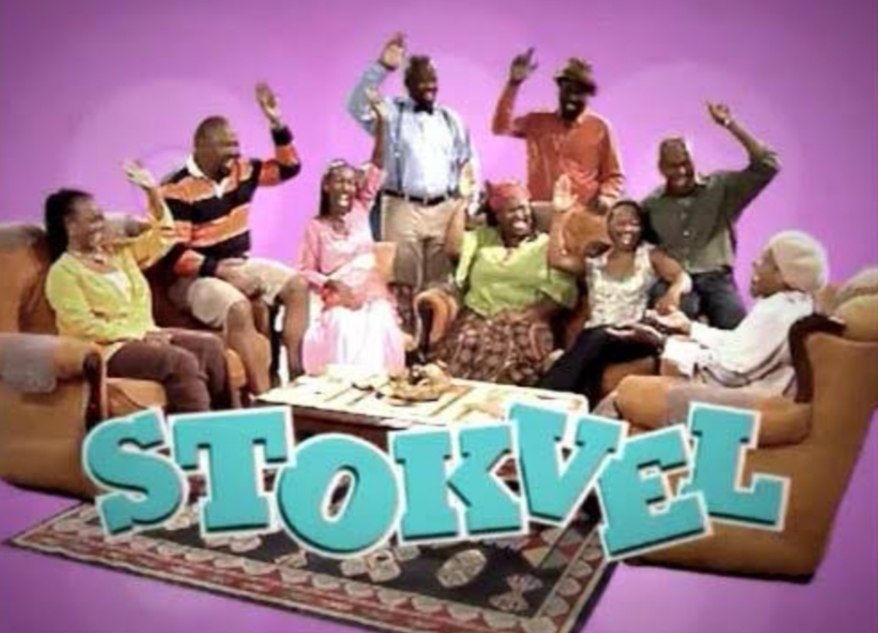
I’ve seen my sisters and aunts achieve great strides personally through such associations while growing up and the one thing that sticks out the most to be is how close they have all become with the other ladies in the Stokvel, over the years. It is a relationship that goes beyond that of friends – it’s a sistahood. Whenever there’s an event at any of the members in the club, the ladies go all out to support and help out. I recently saw them go all out at my aunt’s recent funeral where they bought groceries, helped to cook, clean up and even prepared the meals for the attendees – a task that requires a lot of hands with big hearts and plenty of patience. They support each other in good and bad times, and they are literally there for one another. This, sincere form of support and love, money cannot buy. They also go on vacation trips together and have fun every now and then. There’s significant and deeper layering to Stokvels that I believe still needs to be uncovered and spoken about, beyond the coming in together of different people, clubbing in for financial benefits. And I really hope that the sentiment, comes through from reading this piece.
This spirit of community is palpable on Stokvel as viewers are taken on a journey with the characters and get to witness them at their highs and lows. All of this, together. It’s in how the Majakathata gents support Hazel through her shebeen, how the ladies treat Masechaba with a spirit of tolerance and understanding and how Ayanda supports Hazel each time there are international tourists in town. It’s in how Lerata is always there as a shoulder to cry on at every heartbreak that Ayanda goes through. It’s how both Mojo and Budgets never give up on Biza no matter how many mistakes or shenanigans he finds himself in. It’s how the ladies of Sweet harmony still love Pinkie with all her flaws. It’s how everyone shows love and support to Mojo and Lerata as they start their young family together as newlyweds. It’s clear to see how the spirit of love, Ubuntu and community, resonate and easily comes through on-screen with everyone in the show.
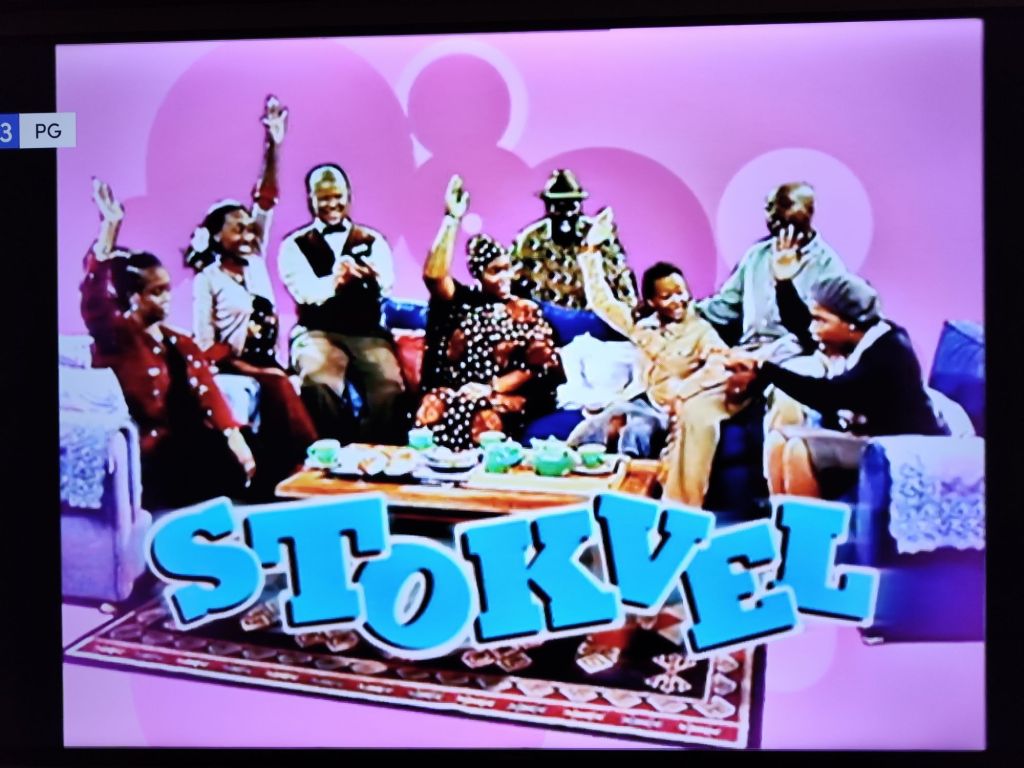
Here’s that rundown I promised earlier, of the prominent key characters of the show and what I believe, makes each of them stand out.
1. Lerata Khumalo (Manaka Ranaka)

The lead female character, played by Manaka Ranaka who’s newly married to Mojo Khumalo. She not only breathes energy and warmth into the show but also acts as a prominent pillar to both Mojo and the two Stokvels in how she has input and influence at how both clubs can be successfully run. She is always coming up with innovative ideas and solutions to problems, as and when they arise and she’s one to face challenges head-on. She’s mature and has a way of engaging with the rest of the characters in a way that unites and carries the show forward. This is one of her most prominent characters she has played on TV after Isidingo’s Nandipha role, that I know of. Her energy and liveliness are contagious and help to carry the show and its vision forward. Manaka can still be seen on prime-time TV to this day as Lucy in SABC’s Generations The Legacy at 8pm and as part of Mzansi Magic’s The Ranaka’s, a reality series where she appears alongside her family.
2. Mojo Khumalo (James Ngcobo most seasons, Hamilton Dhlamini on season 6)
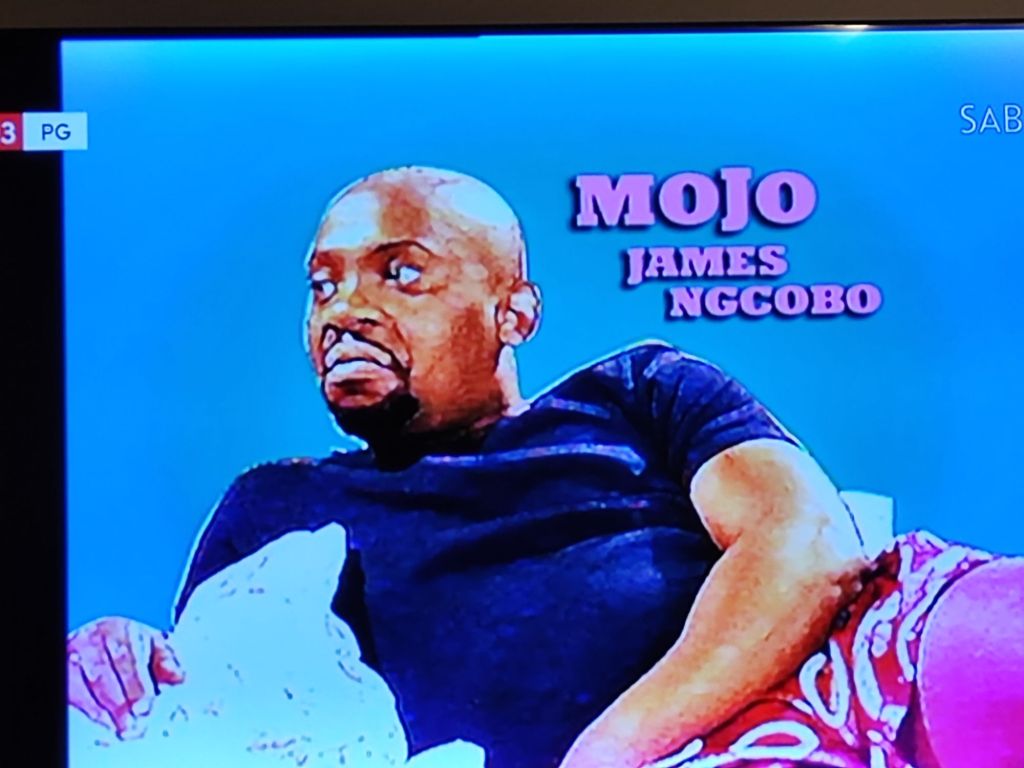

The Lead male character, played by legendary actor James Ngcobo for much of the seasons but the character was taken over by Hamilton Dhlamini on season 6, who is Lerata’s husband. He is a devoted family man, who’s also energetic and handy around the house. He is a trusted second-hand car salesman by profession in the show, a job he really excels in as an outspoken and proud Zulu man. He’s the engine behind Majakathata stokvel and always comes up with innovative ideas and solutions for the gents to save and to many other life problems that equally come up. His charisma and charm easily warm the screen and adds flare, colour and humour to the story. His love and affection for his wife, Lerata, comes through naturally and the chemistry between the two on the show is unmistakably striking. James Ngcobo is now more involved behind-the-scenes in the theatre industry as the Artistic Director at the popular Market Theatre in Johannesburg. Hamilton Dhlamini also did justice to the role and can still be seen on our screens to date. He has had a phenomenal repertoire since his appearance on Stokvel with shows such as Isithembiso, Diep City and more recently as King Banzi on BET’s Queendom among the many TV shows he’s been on.
3. Hazel (Thembi Mtshali-Jones)
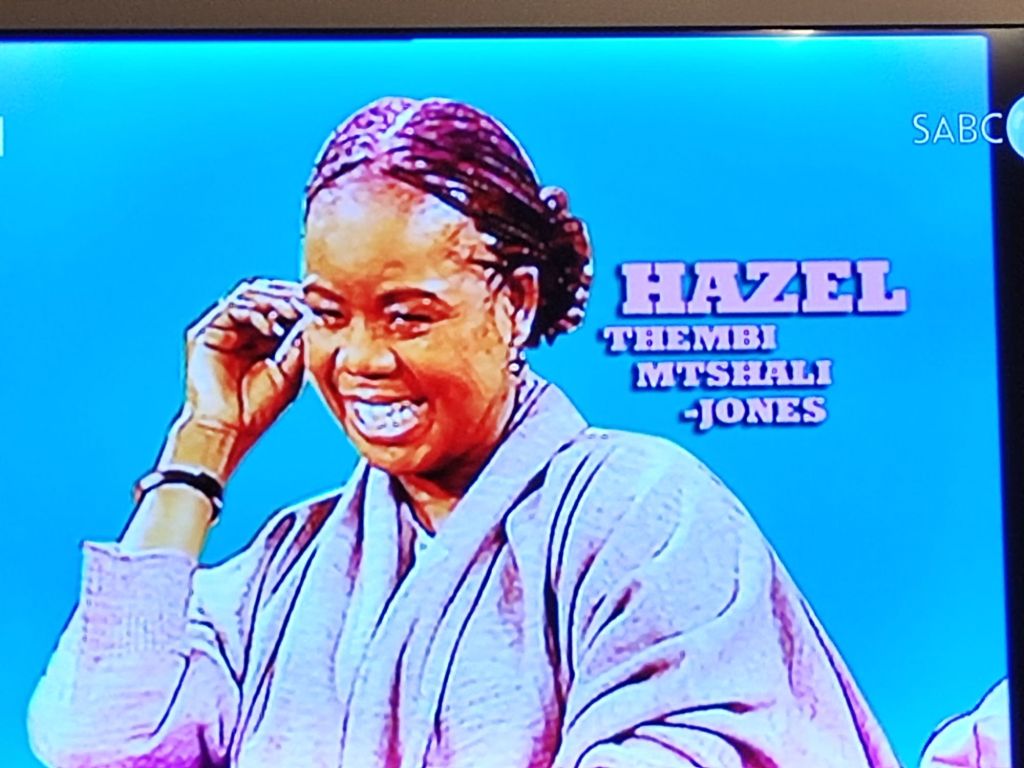
The shebeen queen of style, class and grace played by legendary thespian Thembi Mtshali-Jones. She is not only musically gifted, but she’s also got a no-nonsense approach to discipline, order and how things ought to be done in general. She is a businesswoman who understands the need for her money to grow and her shebeen/tarven is always the talk of the town and abuzz when tourists come to visit Soweto and she capitalizes heavily on that market base. She often has quarrels with Masechaba, who’s always not on her side as Masechaba is a staunch Christian who does not agree with the goings-on at the shebeen. Masechaba refers to the shebeen as a hellhole. This does not deter Hazel in any way as she believes that everyone has a right to opinion on who they are and what they choose to do with their lives. She’s the liberal elder in the show who knows how to have responsible fun and is open-minded in her approach and ways. Mam’Thembi was also seen on similar sitcoms such as S’gudis Nays as Thoko alongside the late Joe Mafela and more recently on etv’s Imbewu weeknight telenovela as MaNdlovu.
4. Masechaba (Limakatso Manotwane, then later Limakatso Mnisi)
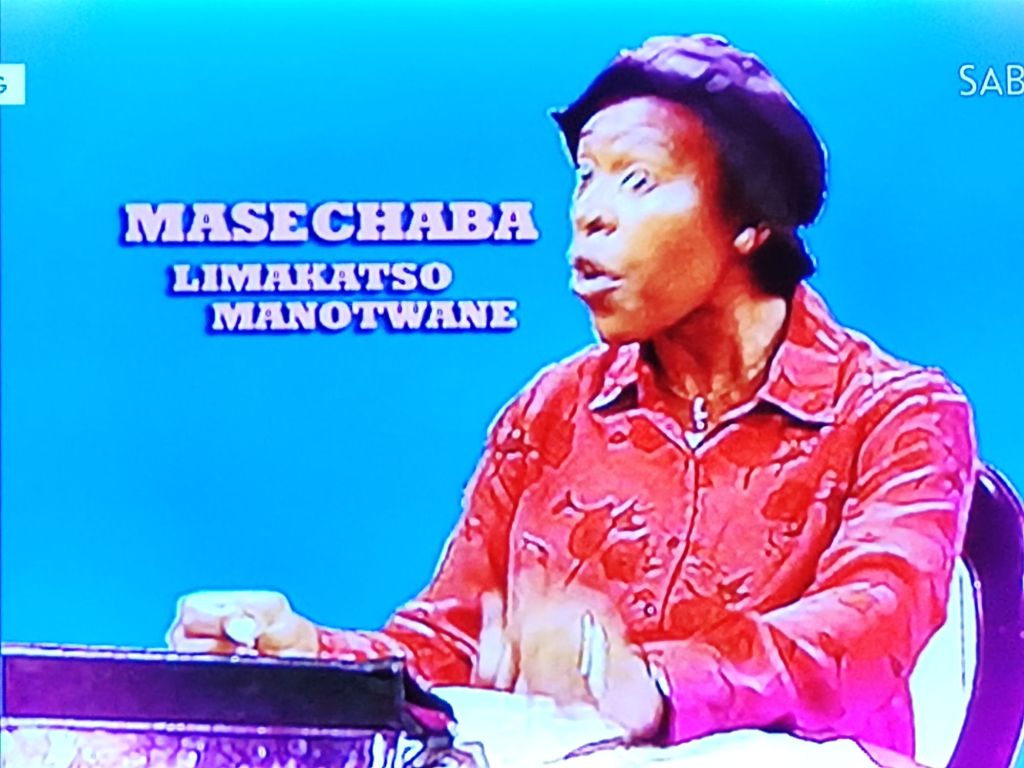
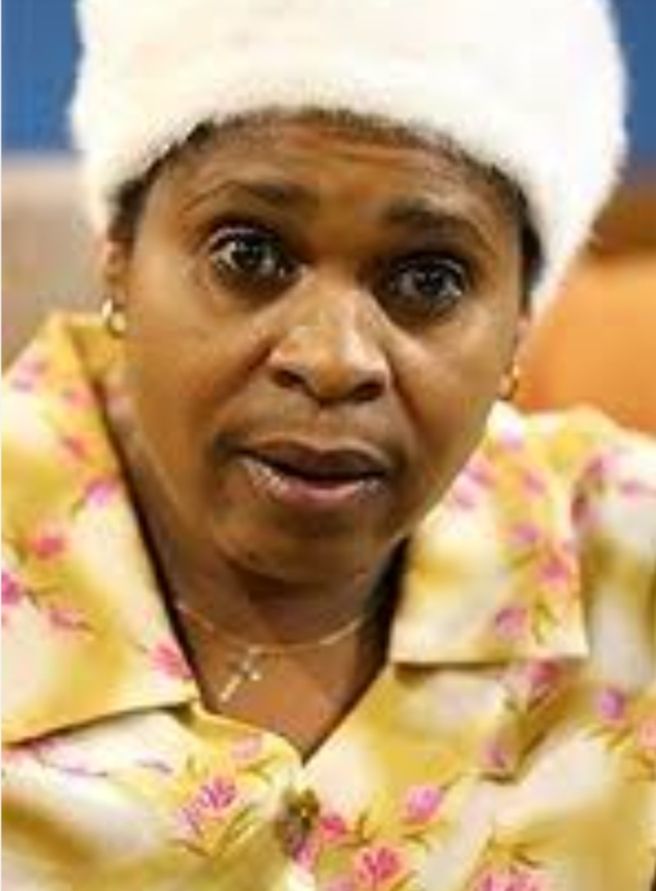
The ultimate M’zalwane (aka Christian) and Mamoruti (Pastor’s wife) of the show who is the chairperson of Sweet harmony. Always insisting on starting and ending each Stokvel meeting with the ladies, on a prayer and always throwing a bible verse or two in conversations to emphasize her godly point to persuade the decisions to be taken. She also happens to be Lerata’s aunt who always believes that she’s got the right solutions and answers to pretty much anything. She does not like to be told otherwise, nor does she like to be second guessed or questioned, which are her weak points as that makes her more narrow-minded in approach. The character was initially played by the late Limakatso Manotwane (pictured), and the role was then taken over by Limakatso Mnisi from 2007 i.e. season 7 -. onwards. Every community has that strict Magrizza (old lady) who believes they are the mirror to moral compass and can right all wrongs in society all on their own and Masechaba is that lady for Stokvel. Limakatso Mnisi can still be seen on Prime TV as MaNtuli on SABC’S Skeem Saam and has had an illustrious repertoire since Stokvel.
5. Ayanda (Andrea Dondolo)
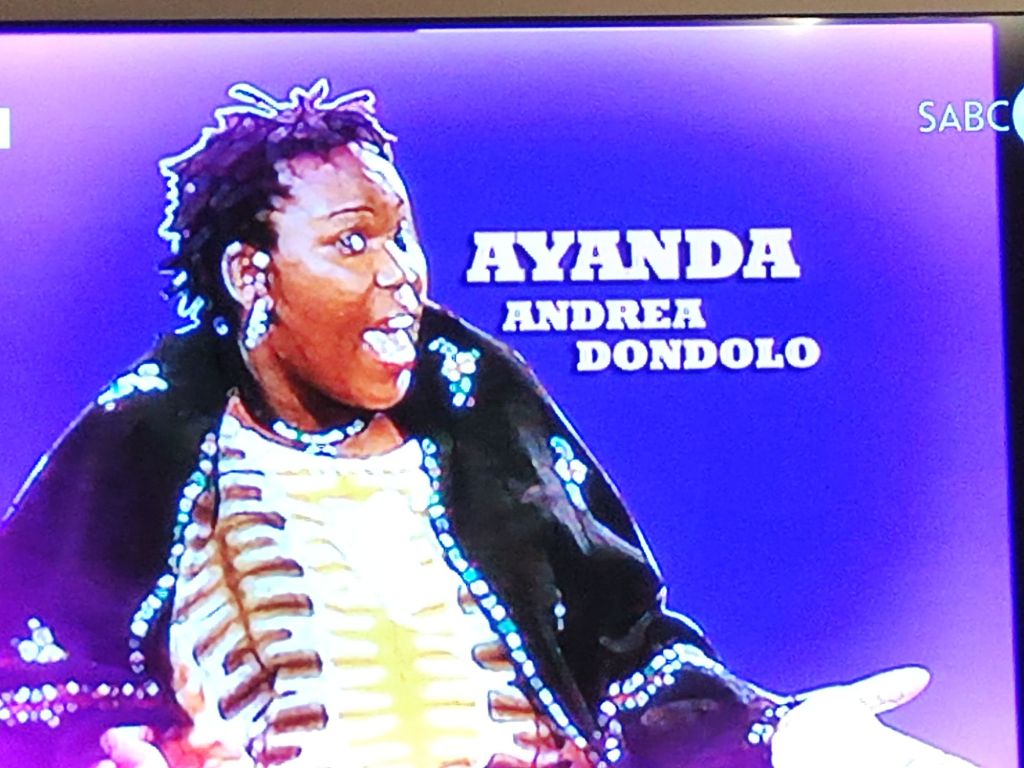
Flamboyant, outgoing, over the top and super confident – that’s how this township tours queen can be best described in the show. It’s difficult to miss Ayanda in the room, if not impossible because of her nature and vibrant personality. She’s smooth on the tongue and is Lerata’s best friend. Her dress sense is also something noteworthy as she embraces Africa and its beautifully rich prints that are a hit with the tourists she always brings to Soweto. She is single and is on the hunt for Mr Right, which often means that she is seen kissing a lot more frogs in pursuit of her lucky prince in the show. Very entertaining, lively, loud, believes in living on the edge and letting loose. Andrea was also seen as Nandi on Home Affairs and more recently, as Aunt Bongi on Mzansi’s The Queen amongst the many other shows since Stokvel.
6. Budgets (Moagi Modise, Ntobeko Rwanqa from Season 5 onwards)
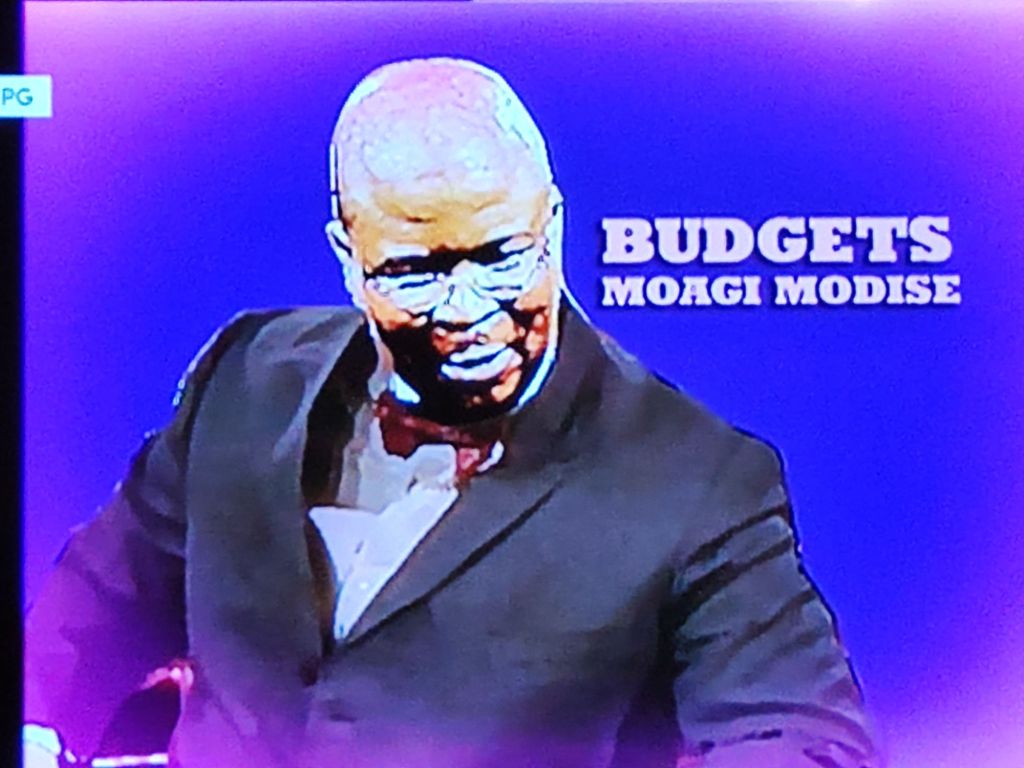

Witty, intelligent and one of a kind and unique — Budgets Naledi is the Treasurer of note at Majakathata stokvel. Always with a calculator to make all the rands and cents make sense with the gents, he is always about sound reasoning and being careful about their risk appetite where saving money is concerned. He is a bit clumsy though, with silly and humourous mistakes here and there. He takes himself and most things seriously for most of the time and is always the sense of reason after Mojo at Majakathata. He is also the sweetest and most caring character in the show, who thinks of others before himself and could do with having a bit of fun and letting loose, once in a while. He is not only big physically but has an even bigger heart. The character was initially played by Moagi Modise from seasons 1 to 4 and was then taken over by Ntobeko Rwanda thereafter. Moagi was also seen as Ambrose on Jacob’s cross and Jim on Jozi H after Stokvel while Ntobeko was also seen as Caiphus on Etv’s Shooting stars and as Captain Rhoyi in season 1 of Gqeberha The Empire.
7. Pinkie (Lele Ledwaba)
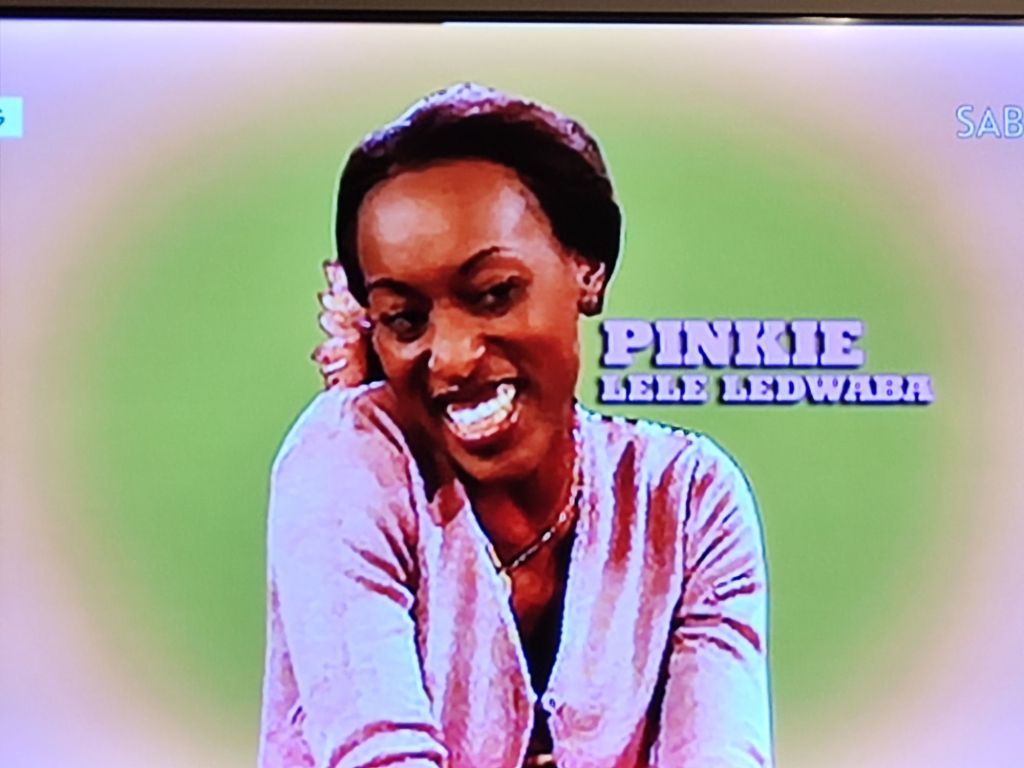
Now, if there’s a colourful and strange character that cannot be missed in the show, it’s this one. Lele Ledwaba delivers a stellar performance of quirky, naive and immature Pinkie Serobe who brings welcomed laughter, life and an interesting spin to the show with her character, behavior and her lines. Pinkie provides the light-heartedness to the show through her sharp, child-like voice and how she does not take most things seriously because she is always not serious. If there’s an accolade that the show hasn’t received, it is one where Lele Ledwaba gets Best Supporting actress – an honour she would deserve. I could watch her performance in the show, over and over again and still be left in stitches and completely dumbstruck. Lele Ledwaba has been seen on many more TV roles since Pinkie which include – as Brenda in Etv’s Rhythm City and notably as Inno in SABC’S Society amongst many other productions.
8. Biza (Tshamano Sebe)
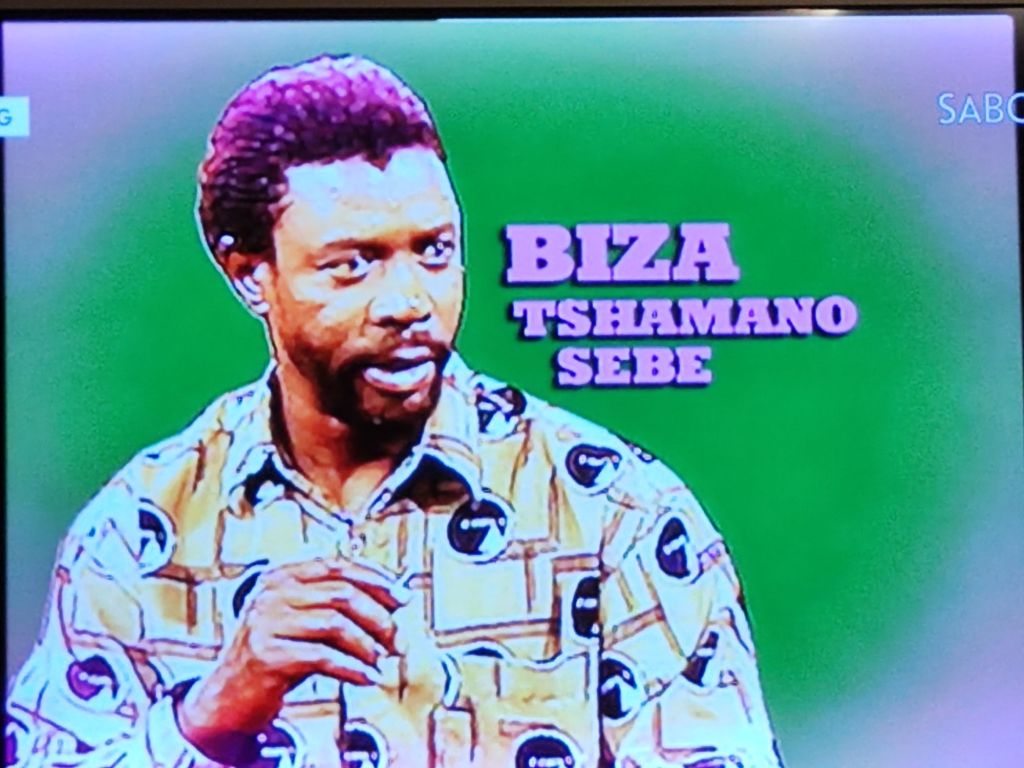
Meet the secret star of the show, Biza Mudau – the troublemaker and SAFTA Award winning Best Supporting Actor in a comedy series for three consecutive times for the same role. His personality, bizarre tendencies and larger than life perspectives on things and ideas, entertains and keeps the audience coming back for more. He’s intriguing and full of surprises, an element that gives him the hook. He’s always finding himself in sticky situations or on the other side of the law, but his close friends easily come up to his rescue and they all have a good beer and laugh afterwards. He is also, behind with this monthly ‘table money’ contributions which often sees him play catch up. He is always coming up with absurd ideas and suggestions to problems that arise, an unorthodox character. In all honesty, Biza is the breakthrough character and performance for the show and is a great highlight to many viewers. I can’t picture the show’s success without mentioning Biza. Following the role of Biza in Stokvel, Tshamano has appeared on shows such as Traffic!, 90 Plein Street alongside co-star Thembi Mtshali-Jones and 24: Redemption season 1 amongst many other productions. I do wish to see more of his work in the years to come as he certainly launched his acting career very well through Stokvel.
When people talk of a best ensemble TV cast, Stokvel is one example to bestow this honour. It’s good to go memory lane and to appreciate the art and talent we have in this country. It’s also good to see the SABC taking us back to when TV was still good, and the content was of high quality and worth the time invested. There’s a lot of variety where local comedy content is concerned but Stokvel ranks up there as among the best to have been produced in this country. Here’s hoping that there are plenty of comedy shows to come, that will take a leaf of inspiration from the likes of Stokvel to carve their own legacies and success. There’s something beautiful that results when reality meets comedy on screen.
Reference
 SithenjwaT