
TV game or quiz shows are addictive. I find myself sitting on my couch for hours on end, guessing the answers and hoping I should have applied to be one of the contestants, maybe I would have done better…Always much easier said than done especially from the comfort of my home.
The bright lights and pressure at the time really kick in and contestants find themselves giving embarrassing answers to seemingly obvious questions on general knowledge. I’d definitely like to see myself on one of these TV game or quiz shows one day.
I’ve found how very limited local TV viewing offering is lately – if it’s not repeats, it’s omnibuses, TV commercials on funeral policies, lawyers for CCMA cases or telenovelas that would be lucky if they saw more than three seasons of their showing. The playing space is quite limited unless you’re into sport, unraveling crime mysteries, nature or like me, news – there’s only so much worth watching. But what it is, however, worth noting how evolved the television industry as a whole has been in South Africa.
From only having four free-to-air channels – SABC 1, 2, 3 and Etv to later, community stations such as Soweto TV on Channel 251, to the plethora of channels on offer these days – we sure have come a long way. From TV in black and white, to pure flat screens, colour and those massive aerials that are mounted on the roof top to improve the picture quality – there was a lot. Thankfully, the Department of Communications and Digital Technologies in South Africa has digital migration targets high on its agenda to expand on the number of channels on offer and improving the TV picture quality for those who cannot afford satellite TV.
While on satellite TV, do you recall M-net’s open time slot back in the days from about 5 – 7PM? That was a clever tease that marketed DSTV well in South Africa. Unfortunately, like any developing country of the world, not every household has the privilege of owning that fancy white dish of an aerial enabling DSTV to be a household name.
DSTV has since grown exponentially since the Open Time days but an interesting phenomenon is occurring now with the advent of the likes of Netflix, Disney Plus, Showmax and others that offer more affordable and competitive deals to rival DSTV. Open View also offers high definition Etv-group channels to households without a monthly subscription, offering a welcomed alternative for the households who cannot afford.

TV sets as well have evolved, they have transformed from those huge and heavy back-bellied monsters, which made them more difficult to pick up and steal to now, slicker and slimmer screens that are mountable on the wall and can even be voice controlled these days. TVs have taken different shapes over the years and the variety now is insane. It’s incredible how this invention by the likes of John Logie Baird and Philo Taylor Farnsworth has been around as early as the 1880s.
Still on the subjects of TVs, do most South Africans still pay for their annual TV licenses like some of us do? I digress.
I must say, the strikingly bright lights and stage designs are key in making the sets attractive and easy on the eye on many of the TV game shows on offer. International quiz shows particularly from the UK, do this bit in their packaging and presentation to us as viewers very well. So on to what the article is about now – a selection of my favorite TV quiz game shows on my TV viewing list at the moment. They are both locally and international and are in no particular order. Let’s play!
The Wheel
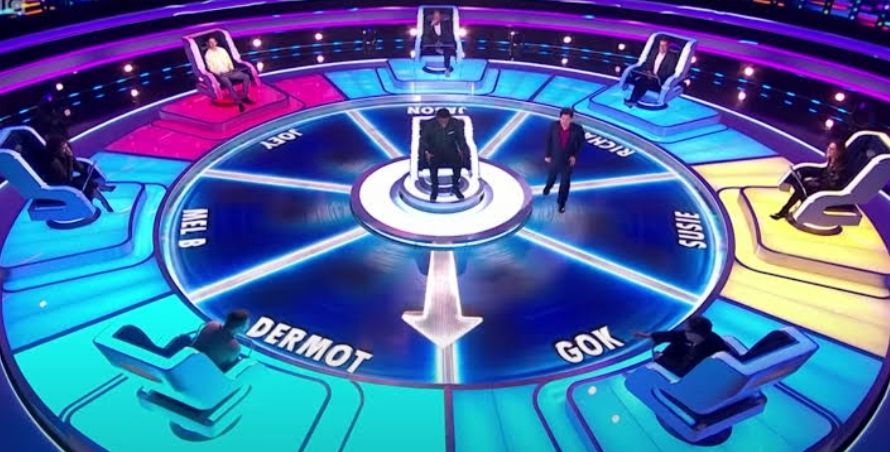
Here, comedian Michael McIntyre presents this interesting game show where celebrity guests, who are experts in specific fields or topics, are placed seated on a rotating stage which spins on each round. It aired on prime-time BBC for five seasons starting in November 2020. Three contestants battle it out on The Wheel with the help of the celebrity experts on a series of general knowledge questions. They are selected to play at random and are all placed below the stage and only resurface when selected to play.
The more questions answered correctly by the contestants, the bigger the final jackpot becomes. The trick is for the contestant selected to have the wheel land on the celebrity guest who’s the expert in the field chosen because the guests can assist the player in answering the question. Only after all the categories have been answered correctly, will the last player be given access to go to the final round where only three celebrity guests can then assist the player to answer the last question. Throughout the show, the celebrities answer the questions as well when they are asked and they lock these in, in the final round only the best performing, middle scorer and lowest scoring celebrities get to be selected to play in the final question. The better the score a celebrity gets, the higher the stakes. The show entertains while dishing out a load of valuable knowledge. The song of the quiz game show is quite catchy and it’s unfortunate that the show is now cancelled.
Who wants to be a millionaire?

This British suspense TV quiz show is one of the longest running in the history of TV game shows with its first episode airing in 1998 and still plays to this day. Originally hosted by Chris Tarrant from 1998 to 2014, the show has evolved and repackaged itself through some new features along the years. The current version of the show is presented by popular car show presenter Jeremy Clarkson, who has easily brought his unique sense of comedy and flair to the show.
Contestants compete against one another to be the first and quickest to get an initial question correct involving arranging a set of answers in the correct order to be granted the opportunity to join the host in vying for the top prize – a million pounds. Once selected, the contestant has to answer a series of questions from a low value to the highest, correctly in order to advance and secure the money won. Along the way, they are given lifelines to help them along which include 50-50, phone a friend, ask the audience and more recently, ask the host.
South Africa has had a version of this show which was broadcasted on M-net from 1999 to 2005 and was hosted by veteran broadcaster Jeremy Maggs. The higher a contestant climbs up, the more money they get and the more difficult the questions become. – stakes do get high. Along the way as well, the players are also given the option to choose where they would like to set up their safety nets. A safety net is a mark along the chain where the player secures that amount of money guaranteed, even if they get the answers wrong afterwards. It gives players breathing room to risk but comes at a cost where they need to be certain of the answer to get it right and to have the safety net guaranteed.
The Weakest Link

“You are the weakest link, goodbye.” Now here’s a famous line that we all know too well, even here in South Africa. The Weakest Link is a British original TV game and quiz show that plays on BBC and involves nine contestants placed in a make-shift space chamber. There, they need to answer general knowledge questions correctly round by round, together and progress through the money chain. When one of them says “Bank” before answering a question, during some point along the chain, they get to place that amount of money into the jackpot. When the contestants answer nine correct answers uninterrupted, they get to bank the highest offer in the round, when a player gets a question wrong, they lose all the money accumulated in that round and may they be the weakest link in that round.
Only the money that is banked can be taken further to the next round. After each round, the contestants themselves vote for who they think is the weakest link based on the number of questions incorrectly answered and the amount of money that was lost along the chain. The voice over artist narrates who the actual strongest and weakest links in each round are and are also revealed to the contestants by the host after voting has been tallied. An interesting occurrence in the show is that the contestants can gang up and at times vote out the strongest link in the hope of throwing a spanner in the works – proof of how unfair life is and in this case, the game show can even be. What also makes the show interesting is how strict and no-nonsense taking yet satirical the hosts tend to be. They hardly laugh or smile with the contestants which adds to the suspense and drama.
The original version of the show started in London in 2000 to 2012 and was hosted by journalist Anne Robinson and later, from November 2021 is hosted by actor and comedian, Ramesh Ranganathan. The show has had a number of versions globally including America, Finland, Brazil and Greece amongst many other countries. South Africa has had a version of The Weakest Link, which was aired from 2003 to 2007, a total of 5 seasons culminating to approximately 110 episodes. It was hosted by the now late Fiona Coyne who passed away in 2010 at the age of 45. It used to air on SABC 3 during Prime Time.
According to Fandom.com, South Africa is the only country in Africa to have the weakest link version broadcasted and adapted. It is also said that the host, Fiona Coyne, got the job ahead of over 500 prospective applicants and before the show was launched in South Africa, Coyne was flown to London to get trained by Anne Robinson herself. This was in 2003 prior to the launch in SA. She hosted the show to a resounding critical acclaim. May her soul rest in peace.
The Chase
Have you ever thought of general knowledge as a race against the best in the TV quiz world? Then, The Chase is the show you’ve been searching for.
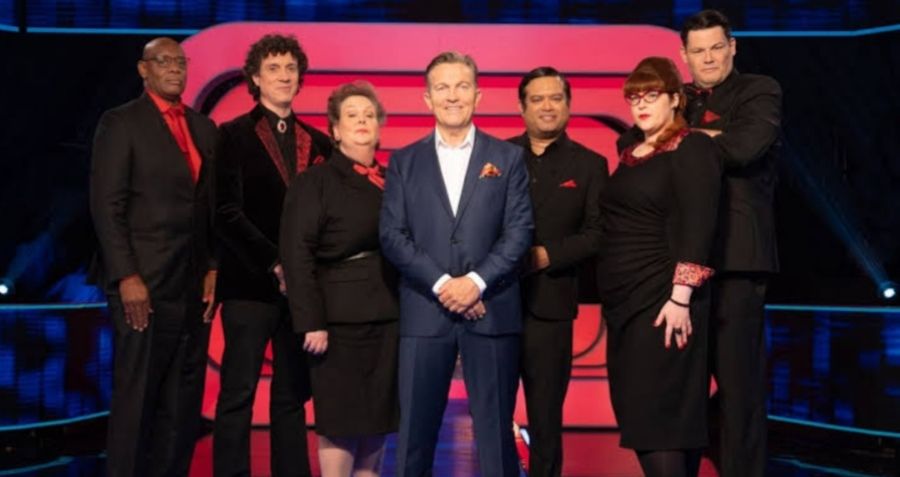
The Chase is a Bristish TV game show that is hosted by Bradley Walsh and it has been on air since June 2009. In the show, four contestants have to go head-to-head against one of TV’s quickest and best quizzers, who are called Chasers. The show has six brilliant chasers who each have the important task of ensuring that the contestants are caught and that they don’t leave the show with the jackpot money that they have collectively accumulated throughout the show. It’s like, when the contestants lose and get eliminated, they celebrate because that is their job.
The chasers are Mark Labbett who is known as The Beast, Shaun Wallace who’s the Dark destroyer, Anne Hegerty as The Governess, Paul Sinha as The Sinnerman, Jenny Ryan who is The Vixen and Darragh Ennis as The Manace. Each are unique in terms of personalities, are quick and very smart. Mark and Shaun have been with the show since inception. My favorite chasers to date are The Sinnerman, Vixen and the Governess. Darragh Ennis is the latest addition to the Chase, after joint after his stunt as a contestant in 2017. He joined the show as one of the chasers in 2020. Talk about having the lucky opportunity to upgrade your status on a show from being a contestant to one of the main quiz masters.
The show starts off with each contestant going one on one with the chaser of the day. Only one chaser is chosen for each episode. Under a timed period, they get to add a thousand pound to each correct answer that they give during this phase and when the time is up, the answers are tallied into money that is taken over for a battle with the chaser, who then appears from behind the large screen and sits on top of the money tilted ladder table. There, the contestants are each offered three options and money values – a high offer, the offer that they accumulated and the lowest offer. These are strategically arranged on the ladder table to show the highest offer closer to the chaser while the lowest offer is seen closer to the contestant, who’s usually standing closer to the bottom side of the tilted ladder table.
The tact in this game is to choose an offer that will enable the player to get back to the team so that they are a part of the final round where they will get to work together to outrun the chaser for a chance to walk away with the grand jackpot. If they choose a higher offer, they can get eliminated quicker by the chaser, should they answer questions incorrectly and they will leave the game. Players who make it to the final round, when they outrun the chaser, get to equally split the jackpot money among themselves. It’s about teamwork, playing to your strengths and running as far away as possible from being caught by the chaser. What a brilliant TV game show this is!
Pointless
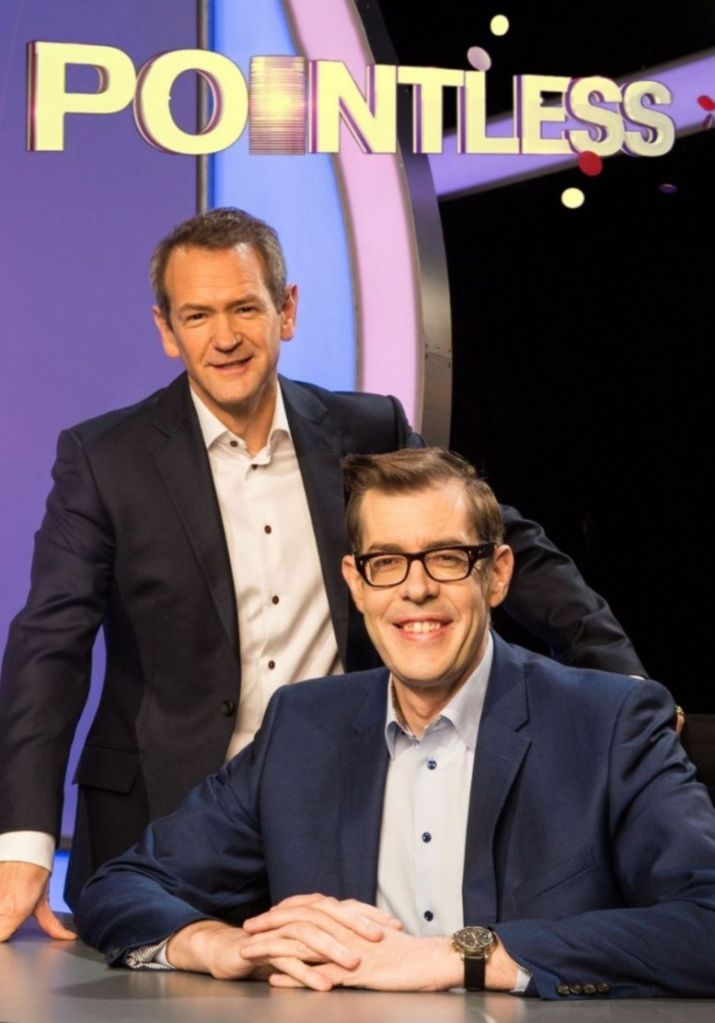
Now here’s a show where the answers that score the lowest of points, actually pay out more. Pointless is a British TV game show hosted by comedian Alexander Armstrong and airs on BBC. It first aired in 2009 and has been going now for over 31 seasons. Before the show, surveys are conducted that ask 100 people a range of general knowledge questions and they lock in the answers. The aim of the show is for contestants to come up with the most peculiar and unique answers that none of the people surveyed would have given. That answer must be correct, and it will then be a pointless answer. Pointless answers add a thousand pounds to the jackpot that rolls over should it not be won.
The show is co-hosted by geek and fact-checker Richard Osman, who complements Armstrong well on the show with their on-screen friendship, humour and wit. Osman guides the contestants and viewers with what the correct answers are on each round and also reveals, at the end of each round which answers were pointless and why certain answers given were incorrect. The topics in the show range from politics, flags of the world, celebrities, nature, chemistry, words to iconic buildings. There is something for everyone here. Contestants also come in pairs and towards the later parts of the game, get to collaborate and help each other in answering the questions. Each pair is given not more than three attempts to come to the show once they are eliminated for scoring the highest points in any of the rounds. The lower the score each pair acquires the higher the chances of them making it through to the next round.
When the pair makes it to the final round, they get to select one last category where they will be asked to discuss and issue three finals answers and if one of them is pointless, they get to win the jackpot money accumulated in the episode. If they don’t, the show rolls it over to the next episode and the contestants only get the coveted pointless trophies.
Tipping Point
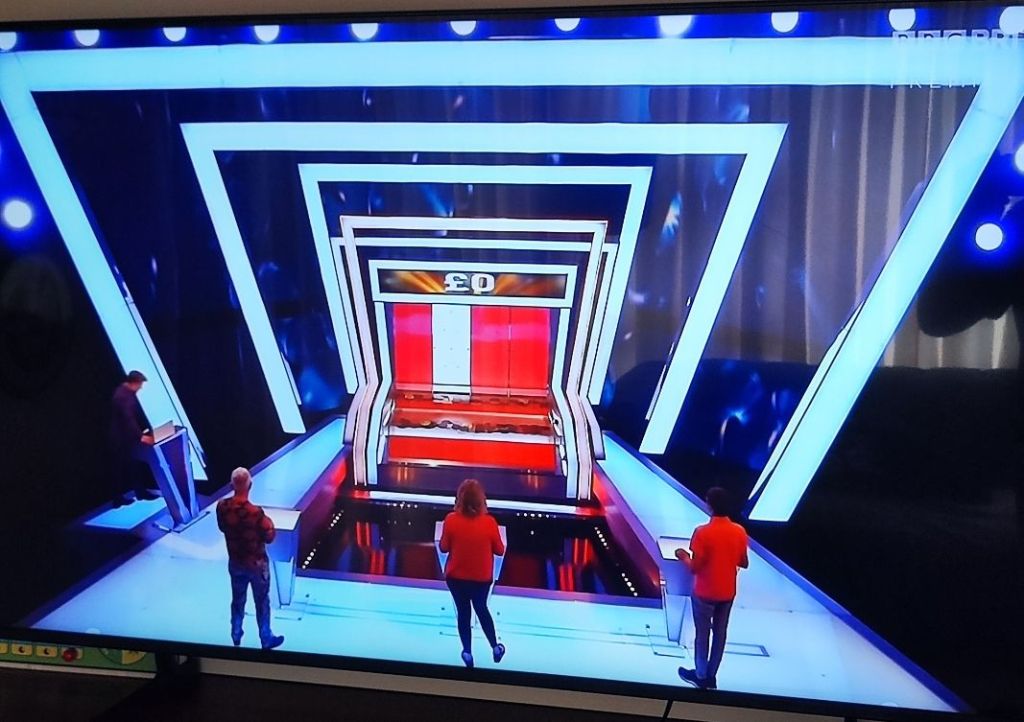
Have you ever wanted to feel like you’re at a casino in your living room? Well, tipping point may just be the game show for your liking. Tipping point is a British quiz game show that is hosted by Ben Shephard and has been on air since July 2012. It airs daily on BBC. Three to four contestants battle it out over general knowledge questions to try and get as many counters as possible into the giant arcade-style machine in front of them, in the hope of using the counter inserted to propel the other counters already laid inside, out of the machine to add some money into their jackpot. One counter that is released from the machine in each play is worth 50 pounds.
What makes this show interesting is the unpredictable nature of the machine, which drives the entire show – contestants are dependent on its good charm for luck. It has a mind and attitude of its own. Contestants line up on podiums with buzzers that are pushed when the question is asked, enabling them to answer. Once they get the question right, they get the chance to push a counter from the top and inside the machine from the comfort of their podiums. They do this by pressing the buzzer as well. Before they press the buzzer, they need to tell the host into which drop zone, they would want to drop the counter into, based on their perspectives of which one could have counters ready to fall off.
The machine is partitioned into four equal zones or parts which are called drop-zones in the show, which go one from the left to four on the right.
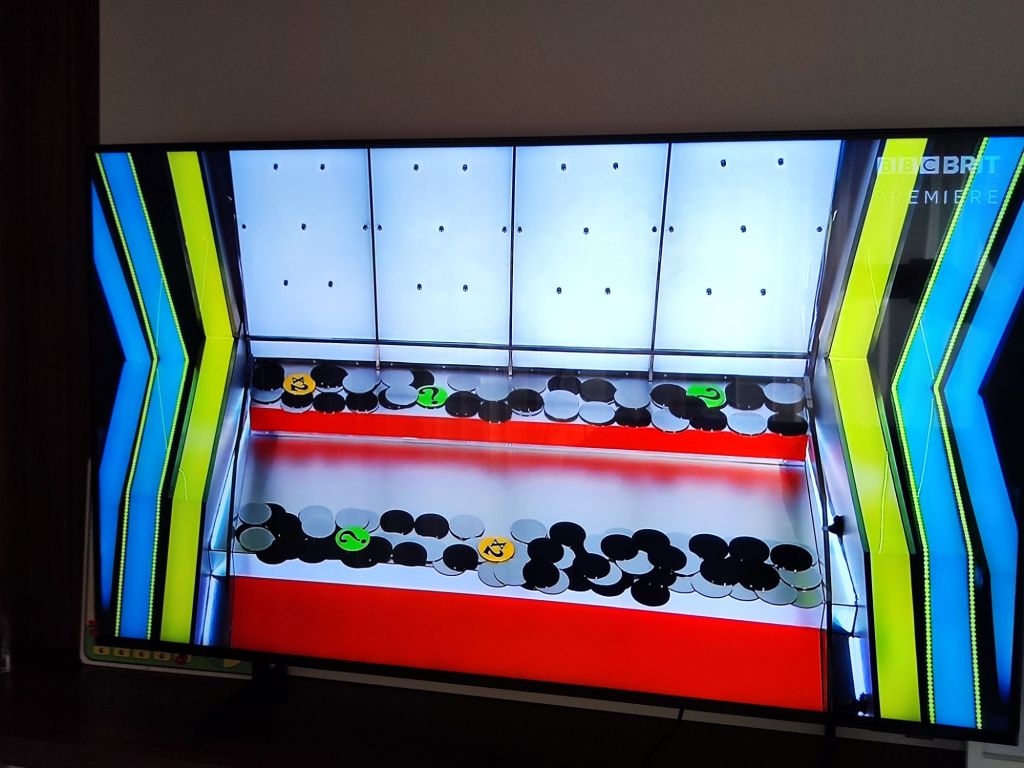
Simple counters that fall out of the machine, count 50 pounds, added to these are X2 counters which double the score, and ones marked as question marks, are called mystery counters that give the contestants a chance to walk away with a special prize on each episode. The X2 or double counter comes in handy to quickly increase a contestant’s jackpot prize or when a contestant is behind and needs to play catch up with another to stay in the game. The contestant with the least amount of money in their score, gets eliminated round by round until there is only one person who makes it to the final round where they stand a chance to with the jackpot prize of 10 thousand pounds – if they drop the jackpot counter out. Should the jackpot counter fall together with the X2 or double counter (and this rarely occurs) – the contestant gets to win twenty thousand pounds.
Deal or No Deal South Africa
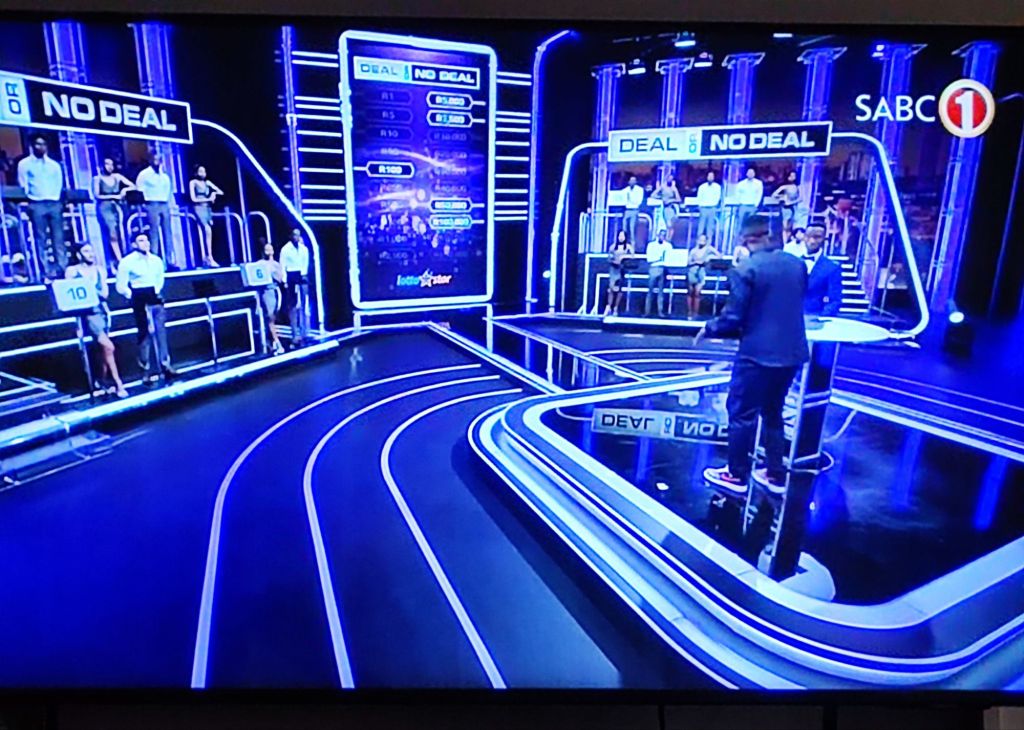
Deal or No deal is another golden classic TV game show that puts contestants on the spot to select numbers at random while trying to remain with the highest money possible. It’s a lady luck’s game this one. The show has been around since 2000 with Dutch origins and various versions of it internationally including British, America and South Africa. I remember the time I tested positive for Corona Virus and had to isolate at home for 14 days, the Bristish version of this game, kept me entertained as I recovered. I was a regular viewer of the game that I even knew the contestants by name and had a predictive model for which contestant will be selected and when to play. This was the British version of the game hosted by Nole Edmunds from October 2005 to December 2016 on BBC. Many variations of the game show exist but the core format remains the same.
Before the start of the episode, there are 26 sealed boxes that are given to the contestants at random (so we are told) and the contestants are not privy to the contents of the boxes. The boxes each contain an amount of money from the lowest 1 pound to the maximum 100 thousand pounds. Only one player gets selected per episode to play, who then drives the order of selecting the boxes to reveal the cash amounts sealed inside. The aim of the game is for the contestant to reveal as many of the lowest amounts in the money tree as possible to increase their stakes of getting a higher offer to purchase for their box from the banker.
The Banker is the anonymous and faceless antagonist in the show who has loads of airtime to always make a call to the host in between the rounds, to offer the contestant some money to sell their box. This offer is calculated based on the amounts of money on the money tree after each round on a probability basis. Once the offer is made, the host often turns to the player and asks the famous question, “Is it a deal or no deal?”.
Should the player like the offer, they deal and get the money guaranteed on the spot but if they do not like the offer made, they reply ‘No deal.” And the offer is rejected, and the game continues. This then goes on until only two boxes are left in the game. The game gets tense and tricky at that the player can take an offer to purchase the box that seems high to end up finding an even higher amount is inside their sealed box at the end of the show, which would have led to a loss, or the opposite can take place, which will result in a classic win.
Deal or No deal is not a new entrant in South Africa as it played in the past on M-net and was hosted by Ed Jordan. Its format was similar to the current Deal or No deal Celebrity special involving models with briefcases, airing on SABC 1 on weekends. The revamped Deal or No Deal launched first on SABC 1 at 07:30PM CAT and now, moved to SABC 2 at 18:30PM CAT.
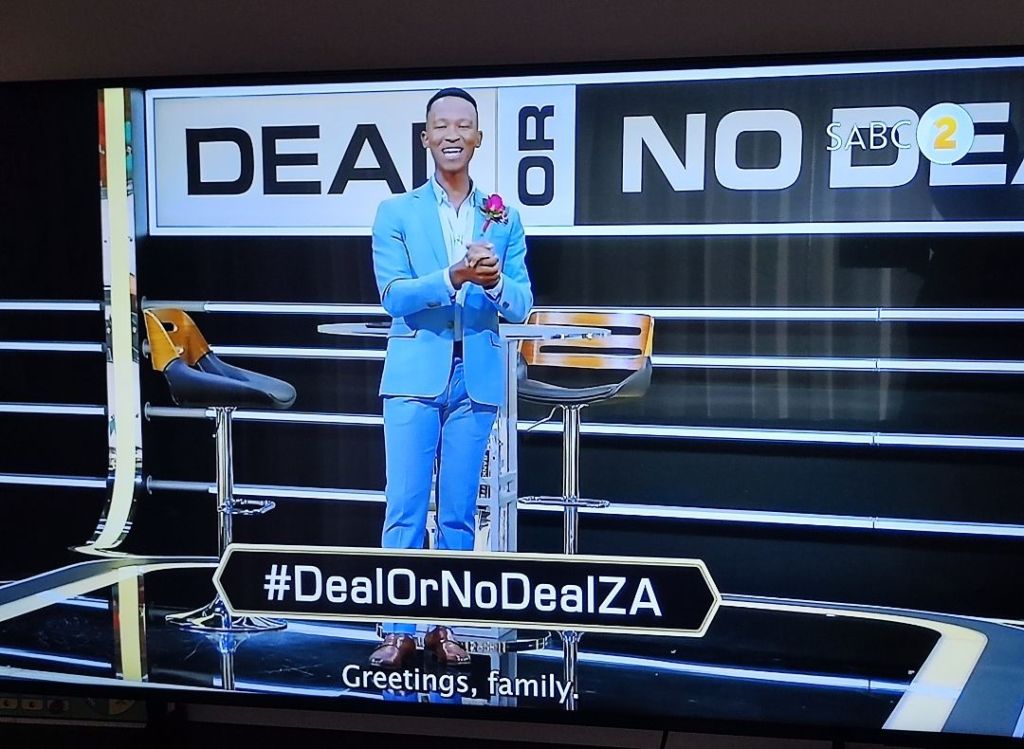
Deal or No Deal SA is hosted by popular broadcaster Katlego Maboe. This is his resurrection in TV presenting and in his life so to speak. His personal life got thrust in the media for scrutiny back in 2020 and that negative publicity led to a number of big brands that he was affiliated with, pulling out of working with him, denting his livelihood. On this show, he’s seen doing his best to brighten up the show through his lighthearted conversations he has with the contestants. This enables him to easily connect with the contestants and bring their lives into the game, which I appreciate the most. On this show, I see him working hard on reviving his reputation, brand and career. He has put in a lot of work in contributing to the growing success of the show particularly after the turmoil and heavy criticism from the public he was subjected to. To have him remain as host of the show, I say, for me – it’s a deal.
Wheel of Fortune South Africa
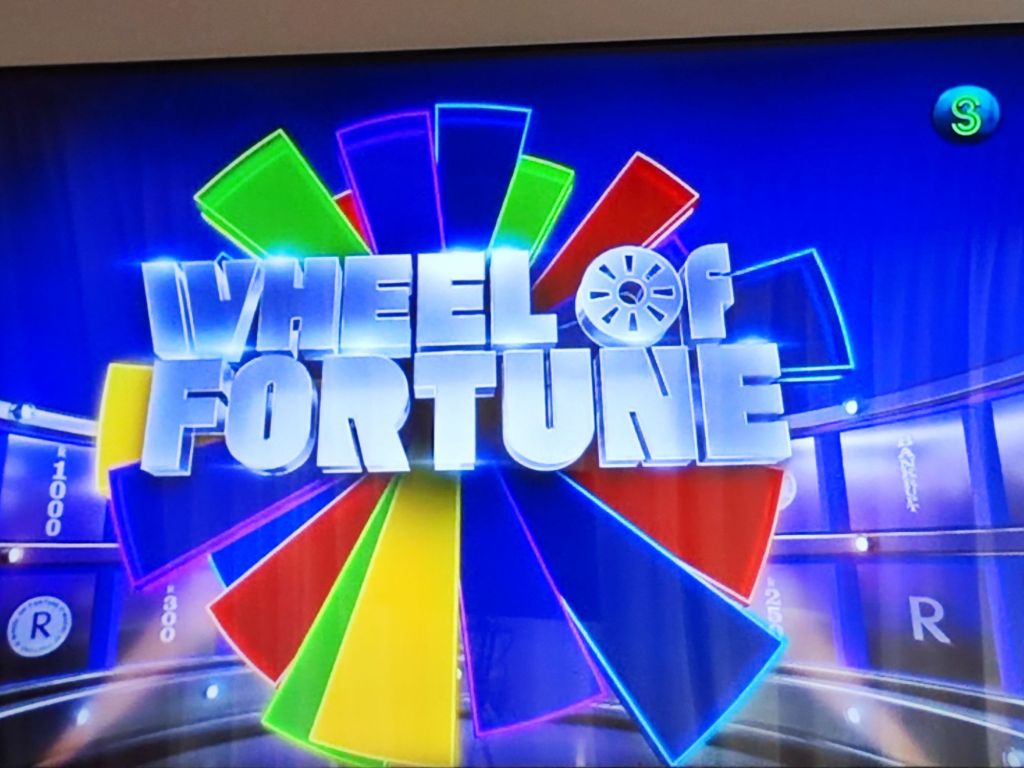
Rorisang Thandekiso brings out her charm, warmth poise in this latest gameshow to hit our shores as it plays weekday evenings on SABC 3, now S3. Rorisang is no stranger to the camera lens as having come through the YOTV ranks amongst many of the broadcasting platforms she has commanded. She has a way to make the contestants feel at ease and open up as they play the game which adds a unique human element to the show. The show is filmed in Cape Town.
Wheel of Fortune brings three contestants together over a giant wheel of money that is used to pick individual letters that make up a word or words and even phrases on the screen in front of them for cash in their pockets should they quickly guess what the word is before it is revealed.
It requires great skill and an art for words. The show has its origins in America, having been produced by NBC from January 1975 and was created by Merv Griffin. Tt came to South Africa in April 2024 and is sponsored by telecommunication network Cell C. Apart for the big cash prize of up to R100 000 up for grabs, there is also a car sponsored by Suzuki that is also up for grabs on every episode. All these are up for the winning when the lucky contestant who makes it to the final round spins the wheel and selects the lucky golden envelope with either one of the prizes. The words on the screen are in a crossword format and they range in categories from famous people, geography, landmarks, buildings, words that go together, sayings to showbiz. There’s a category for everyone and this show is bound to get viewers engaged as they attempt to guess or make up the full names first before the contestants figure it out. I do this all the time. What a fine way to re-energize evenings through fun and words.
I know there’s one or two, if not some more shows I may have missed.
Have you watched any of the shows listed and which ones did I happen to miss? I’d really love to hear your take on game or quiz shows on TV.
Reference
https://weakestlinkinternational.fandom.com/wiki/Weakest_Link_(South_Africa)
 SithenjwaT